
Precision Neuroscience
New York-based developer of a non-invasive brain-computer interface (BCI) — Layer 7™ Cortical Interface, FDA 510(k)-cleared
Precision Neuroscience Corporation (“Precision”) is a non-invasive brain-computer interface (BCI) developer founded in New York in 2021. The company was co-founded by Dr. Benjamin Rapoport, a neurosurgeon and electrical engineer, and Michael Mager, a private-equity-trained business builder. Notably, three of the four founding-team members previously worked together at Neuralink — a lineage we view as a key contextual factor in assessing the company’s technical credibility and competitive positioning.
Holds a PhD in Electrical Engineering and Computer Science (EECS) from MIT and an MD from Harvard Medical School. Practices as a neurosurgeon within the Mount Sinai Health System, specializing in minimally invasive surgery. Was a member of Neuralink’s eight-person founding team before departing in 2018 to co-found Precision. The Neuralink lineage has supported industry visibility, but per available reporting, it also invites persistent comparison with a direct competitor on questions of technology and talent provenance.
A private-equity investor by background, Mager is responsible for translating Rapoport’s scientific vision into a commercialization and clinical strategy. He has publicly and repeatedly positioned the company as “physician-led,” with patient clinical outcomes as the stated primary objective — a framing that consistently differentiates Precision from Neuralink’s more expansive, futurist narrative.
Leads the commercialization roadmap for the Layer 7 platform. Per company disclosure, Mermel holds the President and Chief Product Officer titles; independent third-party verification of his full prior career history remains limited.
Mike Kaswan (Chief Financial Officer) oversees capital strategy, including the Series D raise, while Brian Otis (Chief Technology Officer) leads the electrode-array and systems architecture roadmap. John Woock (Chief Business Officer) and Jayme Strauss (Chief Clinical and Commercial Officer) head business development and clinical commercialization, respectively.
The company’s official website foregrounds a two-person Rapoport–Mager founding narrative, whereas third-party sources — including Wikipedia and MarketScreener — identify Demetrios Papageorgiou and Mark Hettick as additional “scientific founders” of the company. Neither individual’s current role or equity position is confirmed in public disclosures, and we flag the founding team’s full ownership and governance structure as unverified pending further disclosure.
In July 2026, Dr. John Donoghue — founder of BrainGate and a 2026 Queen Elizabeth Prize for Engineering laureate — joined as Scientific Advisor. The addition of a senior BCI researcher to the advisory bench is, in our view, a constructive credibility signal, though we note that an advisory appointment is distinct in governance weight from an executive or board seat.
In roughly four years since founding, Precision has accumulated a multi-layered milestone set: FDA 510(k) clearance, more than 100 patient procedures, clinical partnerships spanning 18 major medical institutions, an industry-first commercial partnership with Medtronic, and a wholly-owned MEMS manufacturing facility. In our assessment, very few BCI companies currently combine an established clinical track record with in-house manufacturing infrastructure at this stage.
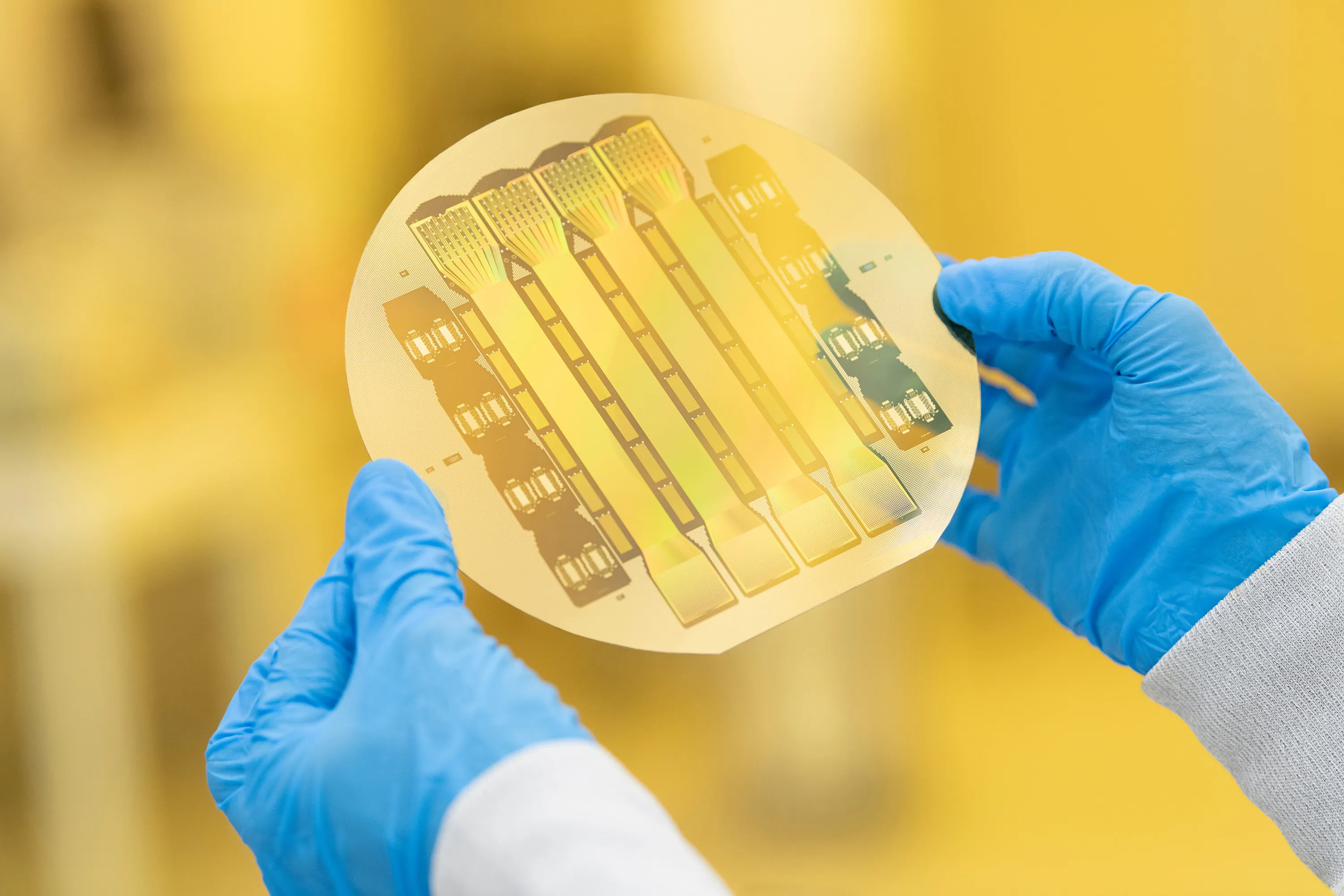
Precision’s core asset is the Layer 7™ Cortical Interface, named for the fact that it sits atop the cortex’s six native layers as a functional “seventh layer.” It is implanted through a micro-slit incision in the scalp and does not penetrate brain tissue, instead conforming to the cortical surface to record and stimulate neural activity.
Precision has performed 100+ procedures across an 18-institution clinical network, including the Perelman School of Medicine at the University of Pennsylvania, the University of Chicago Medicine, the Mount Sinai Health System, and West Virginia University’s Rockefeller Neuroscience Institute. The Layer 7 Cortical Interface has secured FDA 510(k) clearance, enabling use in real-world clinical settings such as intraoperative brain mapping during open surgery.
Precision has formed an industry-first commercial partnership with Medtronic, integrating its technology with an established neurosurgical platform. Deal economics — royalty structure, milestone payments, or equity components — are not disclosed in the press release, and we flag the arrangement as requiring conditional assessment pending further transparency.
Through the 2023 acquisition and integration of Precision BioMEMS, a microfabrication facility for medical devices, Precision secured a wholly-owned, self-operated manufacturing facility in Addison, Texas. Vertically integrating array design and fabrication reduces reliance on third-party foundries and gives the company direct control over supply-chain lead times and quality assurance.
Scientific Validation: Layer 7’s performance has been validated through a peer-reviewed study published in Nature Biomedical Engineering and through joint clinical research with Johns Hopkins University. In May 2024, Precision and Mount Sinai jointly set a world record by recording cortical activity simultaneously across 4,096 electrodes spanning four Layer 7 arrays in a single procedure. Subsequent research with the Perelman School of Medicine used Layer 7’s high-resolution recordings to produce a refined map of the human motor cortex.
Organizational Footprint: Beyond its New York headquarters, Precision operates offices in Santa Clara, California; Addison, Texas; and Minneapolis, Minnesota. Headcount is reported at approximately 117 employees as of early 2026, per a single third-party source; this figure has not been independently confirmed through company disclosure and should be treated as unverified.
Since its 2021 founding, Precision has completed five funding rounds over five years, raising a cumulative $430 million. The most significant transaction is the oversubscribed $250 million Series D that closed on September 24, 2026, co-led by Pershing Square Inc. and the Ackman Oxman Institute (AOI) — a round we view as emblematic of growing alternative-capital and public-market investor interest in the BCI sector.
Participation from B Capital Group and Steadview Capital. The same year, the company filed a patent on its minimally invasive microslit implantation technique and completed development and patenting of the first-generation Layer 7 Cortical Interface.
Led by Forepont Capital Partners, with participation from Mubadala Capital, Draper Associates, Alumni Ventures, and re.Mind Capital, alongside existing investors Steadview Capital and B Capital Group. Precision doubled its microelectrode channel count and filed 17 new patent applications during this period.
An SEC Form D filing in November 2024 first confirmed at least $93 million raised; the round subsequently closed at $102 million on December 16, 2024. General Equity Holdings led the round, with participation from B Capital Group, the Duquesne Family Office (Stanley Druckenmiller’s investment vehicle), and Steadview Capital. Bloomberg reporting placed the post-money valuation at approximately $500 million; per available reporting, this figure originates from anonymous sourcing rather than company disclosure.
Startup databases record a “Series C-II” round on January 27, 2025 (participant: JDP Global) and a further raise on November 5, 2025 (participant: SCI Ventures), though individual round sizes are undisclosed. Given that cumulative funding reached approximately $180 million as of January 2026, we estimate incremental capital raised post-Series C at roughly $25 million — a database-derived inference, not a company-confirmed figure.
Deal Structure: The oversubscribed $250 million Series D was co-led by Pershing Square Inc., the Ackman Oxman Institute (AOI), and an undisclosed leading life sciences investment fund. Additional participants included the Duquesne Family Office, B Capital, ARK Invest, Invus, Mubadala Capital, Mirae Asset Capital, Korea Investment Partners, Hitachi Ventures, and JSL Health Capital, forming an investor base spanning sovereign wealth capital, venture capital, public-market investors, and family offices.
Strategic Significance: The Ackman Oxman Institute is a roughly $400 million nonprofit brain-research institute established by Bill Ackman and his wife, Neri Oxman, following their daughter’s recovery from a brain hemorrhage; its stated focus areas are neurorehabilitation, BCI, and longevity research. A co-lead investor with clinical and research-driven strategic interest — rather than purely financial motivation — may support future partnership expansion, though in our view it also warrants ongoing monitoring for potential conflicts of interest in governance.
Use of Proceeds: Per company disclosure, proceeds are earmarked for expanding the clinical program, advancing Layer 7 through subsequent stages of FDA review, and building out commercialization infrastructure.
• Round size: $250,000,000 (closed oversubscribed)
• Co-leads: Pershing Square Inc., the Ackman Oxman Institute, and one undisclosed leading life sciences investment fund
• Key participants: Duquesne Family Office, B Capital, ARK Invest, Invus, Mubadala Capital, Mirae Asset Capital, Korea Investment Partners, Hitachi Ventures, JSL Health Capital, among others
• Cumulative capital raised: $430,000,000 across five rounds since founding
• Post-money valuation: Not disclosed in press release
Valuation not disclosed: Neither the company nor its investors have publicly disclosed a Series D post-money valuation. A back-of-envelope estimate against the December 2024 Series C valuation (~$500M, per Bloomberg) would imply a meaningful step-up, but no confirmed figure is available.
Series B announcement date discrepancy: The company’s official press release dates the Series B announcement to January 25, 2023, while certain startup databases record the round’s closing date as December 19, 2022 — suggesting a possible lag between funding close and public announcement.
“Pershing Square Inc.” entity identification: The press release identifies the investing entity as “Pershing Square Inc.” Whether this is precisely equivalent to “Pershing Square Capital Management, L.P.” or the publicly listed closed-end vehicle “Pershing Square Holdings” — both associated with Bill Ackman — is not clarified in available disclosure and warrants confirmation.
Precision’s competitive positioning rests on three pillars: simultaneous delivery of non-invasiveness, high resolution, and safe removability; a clinical and regulatory track record built ahead of much of the field; and vertically integrated in-house manufacturing. Against a competitive set that includes Neuralink, Synchron, and Blackrock Neurotech, Precision occupies what we view as a deliberate middle position — differentiating on safety relative to penetrating implants (Neuralink) and on bandwidth relative to endovascular approaches (Synchron).
Layer 7 achieves 1,024 electrodes per array — and 4,096 in simultaneous multi-array recording — without penetrating brain tissue. Where conventional penetrating electrodes trade tissue integrity for signal resolution, Precision positions its “high bandwidth without penetration” combination as its central technical differentiator, aiming to secure both a superior safety profile and high-fidelity data simultaneously.
FDA 510(k) clearance, an 18-institution clinical network, and more than 100 completed patient procedures place Precision ahead of most competing-stage BCI companies on clinical validation. Its early commercial use in adjacent, already-reimbursed applications — such as intraoperative brain mapping — suggests the company has secured a monetization pathway that precedes, and can help fund, longer-horizon implantable indications.
The 2023 acquisition of Precision BioMEMS gave Precision a wholly-owned manufacturing facility in Texas, providing supply-chain control and process reproducibility advantages relative to foundry-dependent competitors. Given the heavy re-approval burden associated with manufacturing-process changes in regulated medical devices, early vertical integration is, in our assessment, a durable and defensible asset.
The Medtronic commercial partnership provides access to established neurosurgical distribution and procedural infrastructure, while the co-lead participation of Pershing Square Inc. and the Ackman Oxman Institute in Series D brings value beyond pure financial capital — including clinical research network access and public-market credibility. That said, such strategic investor relationships also require ongoing governance oversight to manage potential conflicts of interest.
Founding Team Composition as a Strategic Strength: The pairing of a clinically active neurosurgeon-engineer (Rapoport) with a private-equity-trained business builder (Mager) is repeatedly cited as the underpinning of the company’s “physician-led” positioning. Early participation of ex-Neuralink personnel supported technical credibility, but in our view the persistent narrative comparison with a direct competitor is a factor requiring ongoing management in investor communications.