
Unitree Robotics
China’s first listed humanoid robot maker debuts as the global unit-shipment leader — a scarcity-premium story caught between explosive retail demand and a 219x earnings multiple
Unitree Robotics (formally Hangzhou Yushu/Unitree Technology Co., Ltd., 杭州宇树科技股份有限公司) was founded in Hangzhou, Zhejiang on August 26, 2016, as a developer of quadruped and humanoid robots, robotic components, and embodied-intelligence models. The company completed its STAR Market listing on the Shanghai Stock Exchange (688836.SH) on August 19, 2026.
Born in 1990 in Yuyao, Ningbo, Zhejiang province, Wang enrolled at Zhejiang Sci-Tech University in 2009 to study mechatronics engineering and, as a freshman, hand-built a small bipedal robot for roughly ¥200 using scavenged parts — an early signal of the hands-on engineering bias that would define his career. A weak English score kept him out of Zhejiang University’s graduate program and routed him instead to Shanghai University, where his master’s research produced “XDog,” a low-cost, brushless-motor-driven quadruped that won second prize (and an ¥80,000 award) at a Shanghai robotics competition — his first real visibility in the field. After graduating in 2016, Wang joined DJI as an engineer but resigned within two months, raised roughly RMB 2 million (~$275,000) in angel funding on the strength of XDog’s viral reception, and founded Unitree the same year. Over the following eight years he steered the company from commodity quadrupeds (Laikago, AlienGo, A1, the Go and B series) into full-size humanoids (H1, G1, R1, H2), building it into the world’s highest-volume shipper of both robot categories. His robots’ synchronized dance performance on China Central Television’s 2025 Spring Festival Gala turned him into a household name, and in February 2025 he was the youngest attendee at a symposium with President Xi Jinping alongside Huawei’s Ren Zhengfei, Alibaba’s Jack Ma, and Tencent’s Pony Ma — cementing his status as a symbolic figure in China’s national embodied-AI push.
Unitree develops, manufactures, and sells high-performance general-purpose quadruped robots, humanoid robots, robotic components, and embodied-intelligence models, and was among the first companies globally to achieve commercial-scale sales and industrial deployment of quadruped robots. In 2025 the company shipped more than 5,500 humanoid units, ranking first globally by pure humanoid-form-factor volume with a 32.4% share per the CCID/China Electronics News industry report — though Omdia’s broader “general-purpose embodied robot” methodology, which includes wheeled and quadruped platforms, instead ranks rival AgiBot first at roughly 39% versus Unitree’s 32%. The divergence across data providers is a recurring theme investors should hold in mind when evaluating any “global #1” claim in this space.
Beginning with the Laikago in 2017 and extending through AlienGo, A1, Go1 (2021), Go2 (2023, from $1,600), the industrial-grade B2, and the A2 (2025), the quadruped line remains Unitree’s cash-generative core — roughly 42% of 2025 revenue — and has become the de facto standard platform for research and education-market robot dogs on cost alone.
The H1, unveiled in August 2023 as China’s first full-size humanoid capable of running, was followed by the world’s first electric humanoid backflip in March 2024. Unitree has since segmented the lineup across price points — G1 (2024, from $16,000), R1 (2025, from $4,900), and H2 (2025, 2,070 TOPS of onboard compute with a bionic face) — and humanoid revenue mix has risen from 27.6% of sales in 2024 to 51.5% through the first nine months of 2025, marking the pivot to Unitree’s principal growth axis.
Unitree’s own prospectus discloses that its self-developed, general-purpose embodied large model has not yet been deployed at scale in commercial robot products. To close the gap, the company signed a strategic partnership with DeepSeek in August 2026 to co-develop AI models with reciprocal first-look procurement commitments on both sides.
Vertically integrated manufacturing: Domestic sourcing of core components — motors, reducers, controllers, and sensors — reportedly exceeds 90%, a structural cost, lead-time, and quality-control advantage over Western peers (Figure, 1X, Apptronik, Tesla Optimus) that have yet to reach comparable manufacturing scale. A substantial share of IPO proceeds is earmarked for a new smart-manufacturing base targeting annual capacity of 75,000 humanoid and 115,000 quadruped units, alongside AI model R&D, which alone absorbs roughly 48% of the raise.
A pre-listing earnings beat: Released one day ahead of the debut, first-half 2026 results showed revenue of RMB 1.15bn (+48.54% YoY) and net profit of RMB 274m — a swing from a RMB 32.02m net loss a year earlier — both ahead of the prospectus guidance ceiling of RMB 1.13bn. First-half 2026 profit alone already exceeded full-year 2024 net income, underscoring a genuine inflection in unit economics. That said, the timing of a blowout print released the day before listing invites scrutiny, and subsequent quarters will be the real test of whether the growth trajectory is durable or partly a function of pre-IPO channel-stuffing incentives.
Unitree’s funding path began with an approximately RMB 2 million (~$275,000) angel round in 2016 and progressed through 10–11 institutional rounds ahead of listing, according to IT Juzi data. Valuation is estimated to have risen roughly 1,000-fold between the 2016 angel round and the RMB 12.7bn post-money valuation of the June 2025 Series C. Early rounds were led by pure financial sponsors — Shunwei Capital, HongShan (Sequoia China), Matrix Partners China — before the cap table shifted decisively toward strategic capital: Meituan, Tencent, Alibaba, Ant Group, China Mobile, Geely, CNPC, and eventually DeepSeek, forming what is best characterized as a “national-champion” capitalization structure rather than a conventional venture-backed one.
Raised shortly after Wang’s departure from DJI, when his XDog prototype went viral and attracted early investor interest. The proceeds formally capitalized Hangzhou Yushu Technology, Unitree’s predecessor entity.
Shunwei Capital, HongShan (Sequoia China), Matrix Partners China, CITIC Securities-affiliated Jinshi Chengzhang, Shenzhen Capital Group, Vertex Ventures China (entering in 2020 at an expected RMB 3–5bn valuation), and Zhejiang Rongyi Investment participated in succession. Meituan first took a stake in the B+ round and steadily increased its position to become the largest external shareholder at 9.65%.
Unitree converted from a limited liability company to a joint-stock company and appointed its first outside director (Liang Wangnan, general manager of a Beijing equity investment fund) — governance milestones the market read as clear signaling of an imminent listing process.
Funds affiliated with China Mobile, Tencent, ByteDance-linked Jinqiu Capital, Alibaba, Ant Group, and Geely Capital jointly led the round, with the large majority of existing shareholders following on. The round conferred unicorn status (valuation above $1bn) and marked Tencent and Alibaba’s first direct entry onto the cap table. A follow-on investment from the Beijing Robotics Industry Development Investment Fund (managed by Shouchuang Capital) arrived the following month, alongside the formal launch of IPO guidance filing with CITIC Securities as sponsor.
Filing followed shortly after a February 2026 Supreme People’s Court final ruling in Unitree’s favor on a patent-infringement case, which cleared a listing-compliance overhang. The disclosed offering size called for a minimum of 40.446 million shares, or 10% of post-issue share capital.
The final offer price came in well above the RMB 100–120 range the market had anticipated, implying a post-listing market capitalization of RMB 60.99bn (~$9.1bn). AI developer DeepSeek committed RMB 140.8m (~$20.8m) of the strategic placement for a 2.31% stake under a three-year lock-up, alongside a co-development agreement for humanoid AI models that grants Unitree priority access to DeepSeek’s model-training services and grants DeepSeek priority access to Unitree hardware. CNPC and Tencent also participated in the strategic tranche.
Shares opened at RMB 1,100 against the RMB 150.80 offer price, briefly pushing market capitalization to RMB 444.9bn (~$66bn) before gains narrowed. Online subscription drew 9.78 million investors and 53.64 billion shares of valid demand, producing a final allotment rate of just 0.018% — a record low for the STAR Market and equivalent to an average per-lot windfall of roughly RMB 474,600. The rally arrived against a broadly weak domestic tape (Shanghai Composite -0.96%, ChiNext -2.7% on debut day), underscoring the speculative, retail-driven character of the demand.
Unitree’s defensibility rests on eight years of accumulated quadruped manufacturing experience, a vertically integrated, cost-advantaged supply chain with domestic component sourcing above 90%, profitability already achieved at a scale most global humanoid peers have not reached, and deep strategic alignment with China’s technology and state-capital ecosystem.
Domestic sourcing of core components — motors, reducers, controllers, sensors — reportedly exceeds 90%, translating into a structural lead-time, quality-control, and cost advantage over Western peers (Figure, 1X, Apptronik, Tesla Optimus) that have yet to reach comparable manufacturing scale. A price ladder spanning the $1,600 Go2 to the $100,000 H2 Plus captures consumer, research, education, and industrial demand simultaneously, compounding the volume flywheel.
As one of the first companies to commercialize quadruped robots at scale since 2016, Unitree parlayed that manufacturing muscle memory into the 2023 H1 — China’s first full-size humanoid capable of running — and the world’s first electric humanoid backflip in 2024. The iteration speed enabled by repeated mass-production cycles and field feedback represents an execution gap that is difficult for later entrants to close quickly.
Unitree turned a RMB 11.15m net loss in 2023 into a RMB 95.47m profit in 2024, RMB 278m in 2025 (+674% YoY), and RMB 274m in the first half of 2026 alone. With most global humanoid competitors still cash-burning, Unitree’s proven operating cash flow (RMB 672m generated in 2025) gives it a structural edge in capital-markets access and reinvestment capacity relative to peers still years from breakeven.
A broad strategic shareholder base — Tencent, Alibaba, Ant Group, Meituan, China Mobile, Geely, CNPC — provides distribution, data, and compute access unavailable to most Western competitors. The August 2026 reciprocal-procurement partnership with DeepSeek is a deliberate move to shore up the one layer where Unitree, a hardware-first company, has openly admitted to lagging: general-purpose embodied intelligence.
Next leg of the growth story — from hardware manufacturer to full-stack embodied-AI platform: Unitree’s leadership in manufacturing scale and cost is not in serious dispute. What remains unproven, by the company’s own admission, is scaled deployment of its self-developed general-purpose embodied model in commercial products. Whether the DeepSeek alliance and the roughly 48% of IPO proceeds allocated to AI model R&D can support a re-rating from “hardware manufacturer” to “full-stack embodied-intelligence platform” is the key swing factor for the next 12–24 months.
From a hedge fund analyst’s vantage point, the investment case for Unitree carries four principal risk vectors: valuation excess, technological bottleneck (an immature embodied-AI “brain” relative to hardware maturity), geopolitical exposure, and founder-concentrated governance. The extreme intraday volatility on debut day (+629% at the open, narrowing to roughly +524%) suggests the market has already begun pricing some of this risk in real time.
The IPO priced at a 219.2x P/E, roughly 5.7x the 38.56x sector average. A record-low allotment rate (0.018%) combined with a sharp narrowing of gains after the open points to retail-driven, speculative demand rather than fundamentally anchored pricing — leaving the stock exposed to a severe re-rating should forward results disappoint elevated expectations.
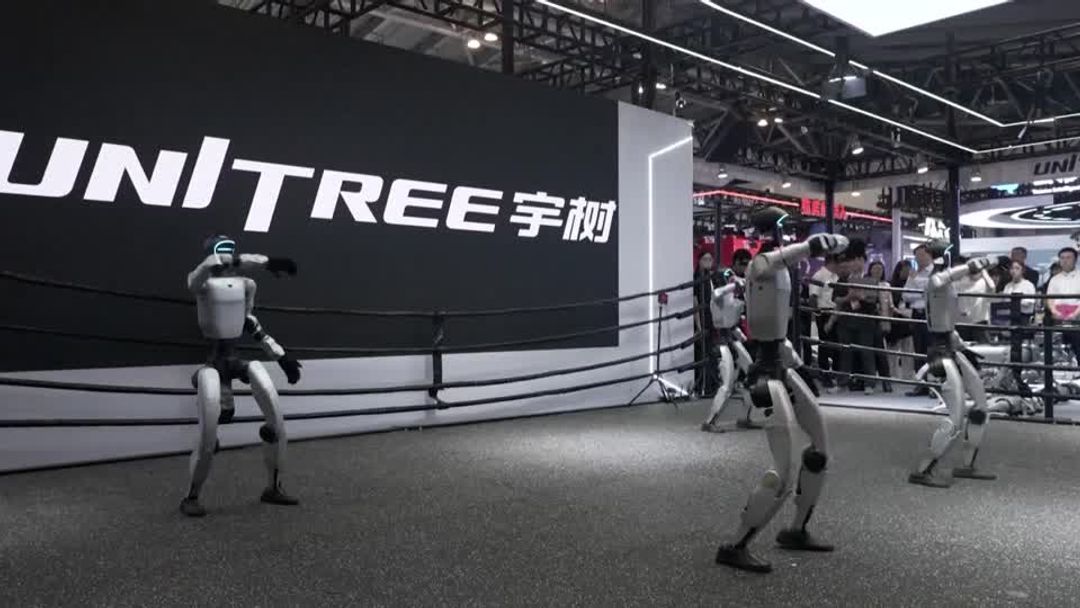
The prospectus explicitly states that Unitree’s self-developed general-purpose embodied large model has not yet been deployed at scale in commercial robots. Industry consensus holds that current humanoids can dance and spar but have not demonstrated reliable autonomous task execution in unfamiliar environments — meaning the DeepSeek partnership’s commercial payoff will likely take time to materialize.
Unitree was added to the US Department of Defense’s Section 1260H list of “Chinese military companies” in June 2026, and a House Homeland Security subcommittee held a hearing in March 2026 specifically addressing national-security risks tied to Unitree and DeepSeek. With overseas revenue consistently above 35% of the total, further escalation — an Entity List designation or a Treasury NS-CMIC-style order — could impair overseas sales and, in a tail scenario, restrict foreign ownership of the securities themselves.
Wang Xingxing holds 23.82% direct equity (33.36% including his indirect stake through an employee incentive platform) but controls 68.78% of pre-IPO voting rights — falling to 65.31% post-IPO — through a Class A / Class B dual-class arrangement in which each Class A share carries ten votes versus one for Class B. This preserves long-cycle R&D continuity but weakens minority-shareholder protections and creates potential conflicts of interest in related-party transactions and capital-allocation decisions.
A Bluetooth vulnerability disclosed in September 2025 (dubbed “UniPwn,” covering CVE-2025-60250/60251 and related CVEs) affected the Go2, G1, H1, and B2 lines via hardcoded encryption keys, with disputed reports on patch completeness as of mid-2026. Separately, despite a 2022 civilian-use pledge co-signed with Boston Dynamics, Unitree-derived robots have surfaced in military and paramilitary contexts — reported Russian-forces use of the Go1, appearances in China-Cambodia joint exercises, and weaponized Go2 units documented in Ukraine — creating latent reputational and regulatory tail risk.
R&D spending of roughly 9% of revenue trails both STAR Market and sector averages, raising questions about Unitree’s ability to defend its technology lead as AgiBot (2025’s #2 shipper), Xiaomi, Tesla Optimus, Figure, and others scale up. Even the “global #1” shipment claim itself is contested — CCID, Omdia, and the company’s own prospectus each apply different methodologies that produce different rankings — warranting independent verification of any market-share narrative.
Data-integrity note: Cumulative funding figures cited across sources (Tracxn estimates range from $155m to $252m), shipment-ranking methodology (CCID vs. Omdia vs. company disclosure), and market-capitalization figures (intraday peak of RMB 444.9bn vs. debut-close levels) vary materially by source. Investors should cross-reference the original Shanghai Stock Exchange disclosures (招股说明书 prospectus and 上市公告书 listing announcement) and subsequent interim/annual filings before drawing final conclusions.